" height="21px" id="aE25rWru5" transform="translate(6.02 1.01)" width="11.666710897329551px"/></svg>)
" height="20.000028433930208px" id="C8QbQu0ua" transform="translate(2.3 1.72)" width="18px"/></svg>)
" height="15.27606666666667px" id="Mxk6Ub6Mo" transform="translate(0.386 7.539)" width="4.790326666666639px"/><path d="M 10.066 0.05 C 9.89 0.028 9.702 0.017 9.514 0.005 C 6.832 -0.105 5.32 1.485 4.79 2.169 C 4.647 2.356 4.581 2.467 4.581 2.467 L 4.581 0.425 L 0 0.425 L 0 15.701 L 4.581 15.701 L 4.79 15.701 C 4.79 14.145 4.79 12.599 4.79 11.043 C 4.79 10.204 4.79 9.365 4.79 8.527 C 4.79 7.489 4.713 6.385 5.232 5.436 C 5.673 4.641 6.468 4.244 7.362 4.244 C 10.011 4.244 10.066 6.639 10.066 6.86 C 10.066 6.871 10.066 6.882 10.066 6.882 L 10.066 15.767 L 14.857 15.767 L 14.857 5.8 C 14.857 2.39 13.124 0.381 10.066 0.05 Z" fill="rgb(83, 83, 83)" height="15.767187855553347px" id="rDScQOEBh" transform="translate(8.069 7.158)" width="14.85668000000002px"/><path d="M 2.781 5.563 C 4.318 5.563 5.563 4.318 5.563 2.781 C 5.563 1.245 4.318 0 2.781 0 C 1.245 0 0 1.245 0 2.781 C 0 4.318 1.245 5.563 2.781 5.563 Z" fill="rgb(83, 83, 83)" height="5.562959999999999px" id="TT9KpTsO5" width="5.5629599999999755px"/></svg>)
Spectrum Doubled online orders within six months of launching on the platform


Sophia Kensington
Last updated:
The challenge
Spectrum's core problem wasn't demand. It was conversion. They had plenty of people reaching out, but no structured way to move those conversations toward a signed project.
Here's what kept breaking down:
Inquiries came through multiple channels with no central view
Response times varied wildly depending on who saw the message first
Proposals were built from scratch every time, often with inconsistent pricing
There was no way to track where a lead was in the pipeline
The team was busy, but a lot of that activity wasn't translating into revenue.
A look at their workflow before
When a new inquiry came in, someone on the team would reply from their personal inbox. If the lead seemed serious, they'd put together a proposal in Google Docs, email it over, and wait.
There was no shared system. No templates. No reminders. If a lead didn't respond, it usually just disappeared.
It worked when they had five or six active conversations. But at twenty or thirty, things started falling through the cracks constantly.
Where things slowed down
The biggest bottleneck was between first contact and proposal delivery.
On average, it took Spectrum four to five days to send a proposal after initial contact. By that point, many leads had already moved on or gone with a competitor who responded faster.
The team also spent a lot of time on proposals that went nowhere, because there was no way to qualify leads before investing that effort.
What needed to change
Spectrum needed a system that could capture every lead in one place, help them respond faster, and give them visibility into what was actually converting.
They didn't want a complex CRM built for enterprise sales teams. They wanted something that matched the way a small creative agency actually works.
The new approach
Here's how their process looks now:
New inquiry captured automatically in the CRM
Lead tagged and prioritized based on service type
Proposal generated from a template with pre-set pricing
Client reviews and approves proposal online
Project created directly from the accepted proposal
Follow-up reminders triggered automatically for stale leads
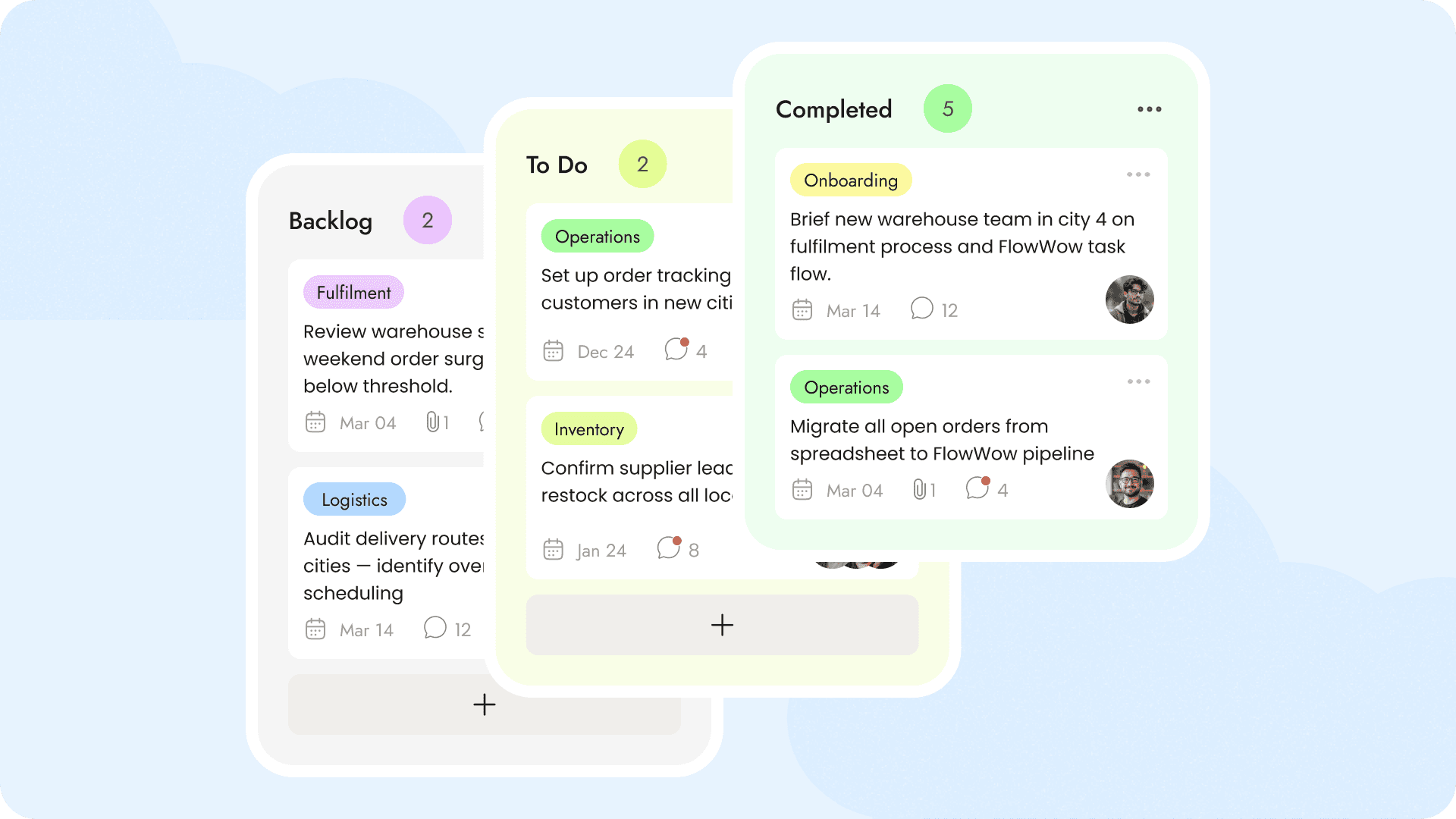
Seeing it in action
The shift was immediate. Instead of checking three inboxes and a spreadsheet, the whole team could see every active lead in one dashboard. Proposals that used to take a full afternoon now took fifteen minutes. And the follow-up reminders meant nothing slipped through quietly.
Within the first month, their average response time dropped from four days to under six hours.
The results
The impact wasn't dramatic overnight, but it was consistent.
Within six months:
Online orders doubled compared to the previous period
Proposal turnaround dropped from 4-5 days to same-day
Lead response time improved by 85%
Conversion rate on qualified leads went from 18% to 34%
But the most meaningful change was confidence. The team stopped wondering if they were missing opportunities. They could see the full picture.
What actually changed
The business didn't feel chaotic anymore.
Every lead had a clear status and next step
Proposals looked polished and went out fast
The team could focus on creative work instead of admin
Revenue became more predictable month to month
Instead of hoping leads would convert, they had a process that made conversion the default.
Final thoughts
Spectrum didn't need more marketing or a bigger team. They needed a better system for handling the demand they already had. By centralizing their pipeline, speeding up proposals, and following up consistently, they turned existing interest into real revenue. The work didn't change. The way they managed it did.